 U.S. rice - when you care about your family's health
Mar 04, 2016
ARLINGTON, VA – Yesterday USA Rice joined with more than 60 groups in observing "World Birth Defects Day" to let consumers know about the importance of folic acid in preventing birth defects and about rice as a source of folic acid. USA Rice used social media posts and the hashtag #WorldBDDay to help spread the word about the importance of folic acid for moms-to-be and that one-cup of enriched white rice delivers 80 of the recommended 400 micrograms of folic acid, which is 20 percent of the Daily Value.
Vitamins and minerals used in the enrichment process prevent neural tube birth defects and anemia caused by nutritional deficiencies. Since January 1, 1998, all enriched grains in the United States are required to be fortified with folic acid. The Centers for Disease Control reports that fortification of folic acid in enriched grains has resulted in a decrease in neural tube birth defects by 36 percent in the U.S, making it one of the top ten health initiatives in the first decade of this century.
As a result, Dr. Keith-Thomas Ayoob, a pediatric nutritionist, recommends U.S. rice to his patients, saying: “All enriched grains are now fortified with folic acid but I am partial to enriched rice because rice is such a great vehicle for adding other nutrient-rich foods to the diet. It’s a great way to get vegetables, lean meat, and even fruit into kids – and expectant moms. These foods can also contain folic acid and most people need more fruits and vegetables in their diets anyway, so a meal that contains enriched rice can be a real win-win.”
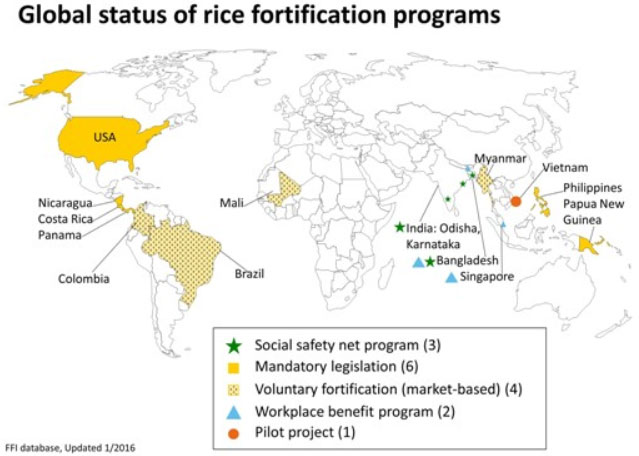
“As you can see from the map above, rice from other origins is not likely to be fortified,” said USA Rice Director of Domestic Promotion Katie Maher. “This is especially important for pregnant women to keep in mind when they’re grocery shopping and preparing meals. Rice grown and milled in the U.S. is always enriched, and eating U.S.-grown white rice is an easy, affordable way to increase the level of folic acid in your prenatal diet.”