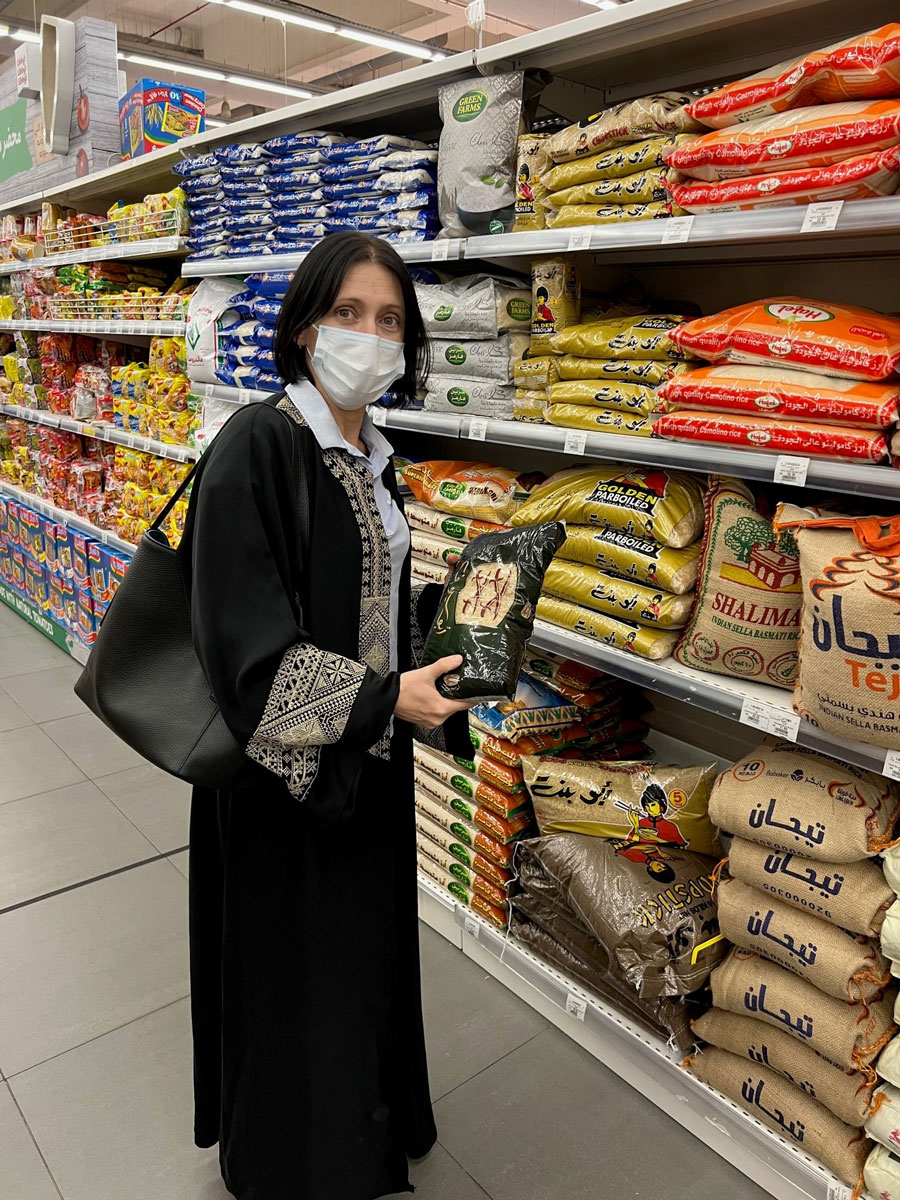
 Eszter Somogyi shops the rice aisle in Jeddah
Feb 14, 2022
JEDDAH, SAUDI ARABIA – Last week, USA Rice Director of Europe, Middle East, and Africa Eszter Somogyi met up with five local traders here to learn about the current market situation and upcoming trends. She was joined by local FAS Senior Ag Marketing Specialist Hussein Mousa, as well as the local USA Rice consultant for the region.
Saudi is major rice importing country with total imports of more than 1.5 million MT in 2020. India is the major rice supplier here with more than 75 percent of the market share, followed by Pakistan, both suppling mostly basmati rice, as well as non-fragrant long grain rice. The third largest supplier is the U.S. with a nearly 8 percent market share exporting high value, long grain parboiled rice, as well as Calrose medium grain rice.
U.S. rice sales to the Saudi Kingdom normally average more than 100,000 MT per year, however in 2021, sales shrank to 92,500 MT due to shipment delays caused by the global shipping crisis that resulted in low stocks and, in some cases, out of stock situations here. High freight costs decreased the relative price difference between basmati rice and U.S. origin, and were another factor tempting consumers to switch.
To counter this downward trend, USA Rice initiated a major promotional campaign at the end of 2021 targeting younger Saudi consumers.
“Saudi is a very young country,” said Somogyi. “Seventy percent of the Saudi population is under 30 years old, so it’s imperative that these young consumers make the connection between U.S. rice and superior quality and taste when shopping.”
In addition to offline media and in-store point of sale materials, USA Rice is collaborating with local Saudi influencers to prepare traditional rice dishes, such as kabsah and saleeg, with U.S. rice, and share these recipes with their followers. This influencer campaign has been very successful, garnering more than 900,000 views in 2021, and has been planned again this year.
“Traders we visited with last week mentioned that people are ordering kabsah at local restaurants and asking for it to be prepared with U.S. rice. This is what we like to hear,” said Somogyi. “We look forward to continuing to partner with local U.S. rice brands to increase awareness and demand for U.S. rice.“