
November 3, 2026
Seed to Table: The Life Journey of U.S.-Grown Rice
You probably don’t think much about how rice gets to your plate. You pick up a bag at the grocery store, measure out what you need, and soon enough it’s steaming on your stovetop ready to eat!
But that bag of rice has a story that starts long before it reaches a bag in the rice aisle.
So, what happens between the moment a rice seed is planted and the moment that rice reaches your pantry? Let’s follow the distinct journey of U.S.-grown rice, from the fields to your table.
Starting in the Field 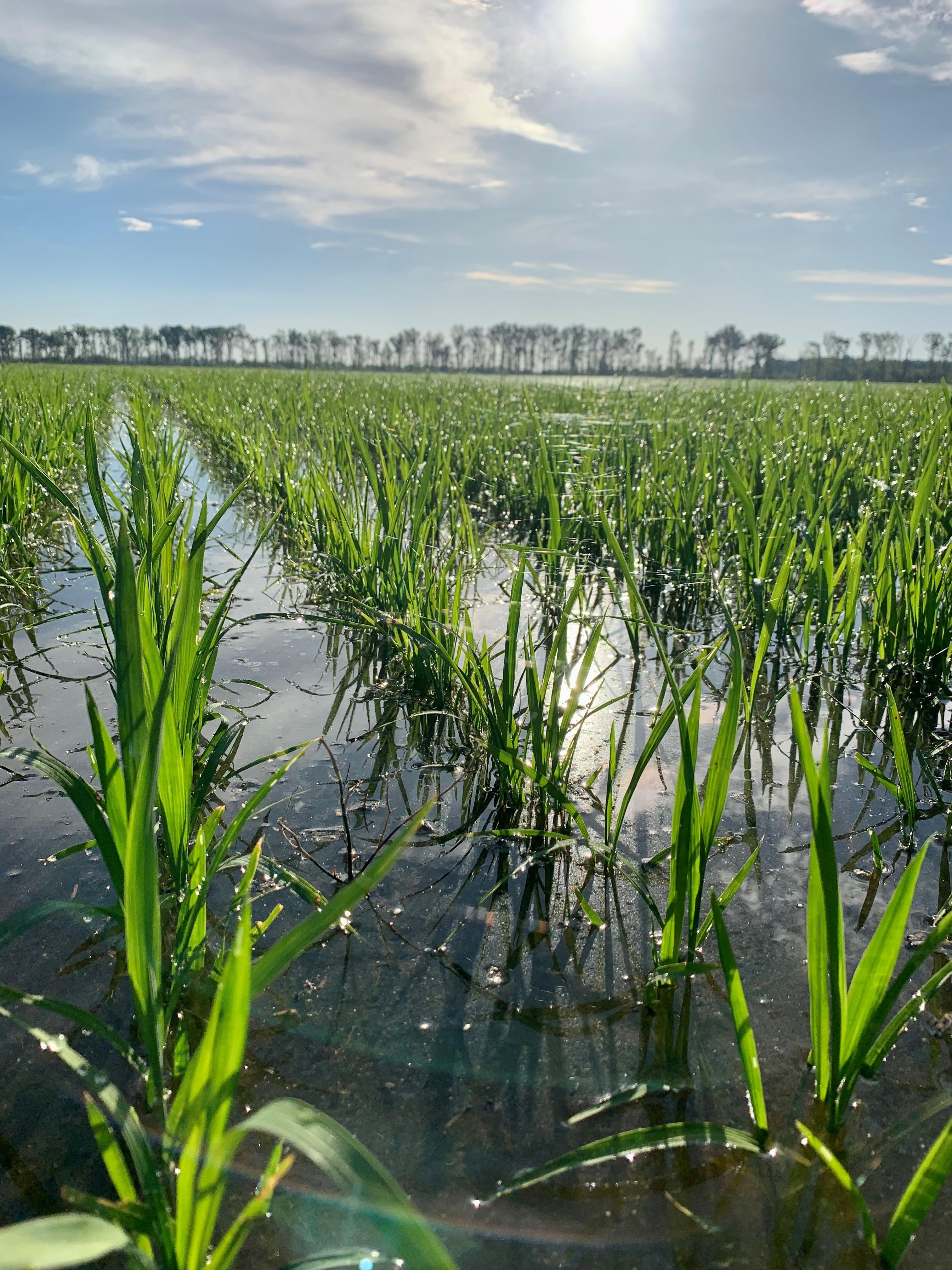
Rice season begins with preparing the fields for planting. Unlike many other grains, rice is a semi-aquatic plant, meaning it grows especially well under flooded conditions maintained through irrigation. The heavy clay and silt soils found in many U.S. rice-growing regions are particularly well suited for rice farming as they naturally retain water.
Before planting, rice farmers use precision technology such as GPS and laser-guided equipment to
level their fields and help manage water efficiently throughout the growing season.
Depending on the region, planting begins as early as late February and can continue throughout May. Farmers plant rice seeds using specialized equipment, including grain drills and airplanes. The planting method is farm-specific, but all achieve the same result: rice in the ground!
Growing The Crop
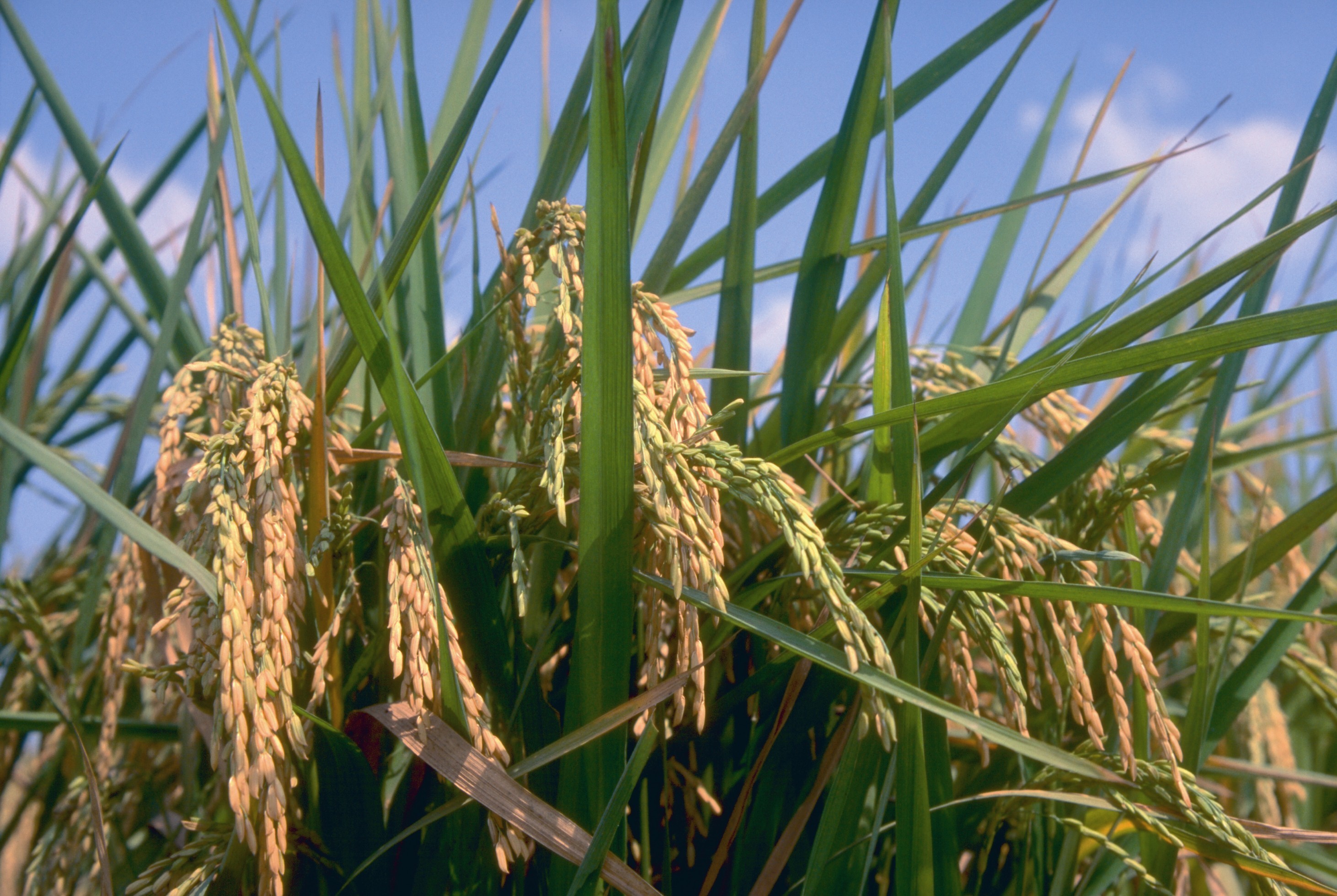
Once planted, rice generally takes about 120-140 days to reach maturity. Throughout the growing season, farmers will carefully manage water and other growing conditions.
Traditionally, rice fields are covered with about two to four inches of water, although some may use other irrigation methods like row such as furrow irrigation, depending on the field operation and field.
Poly-tubing is often used to facilitate irrigation whether flood or furrow irrigated.
At harvest maturity, the rice crop has grown to three to four feet in height and is ready to be harvested.
By mid- to late summer, the developing rice grains begin to appear in long clusters, called panicles
or heads, at the top of the plant.
Harvest Time
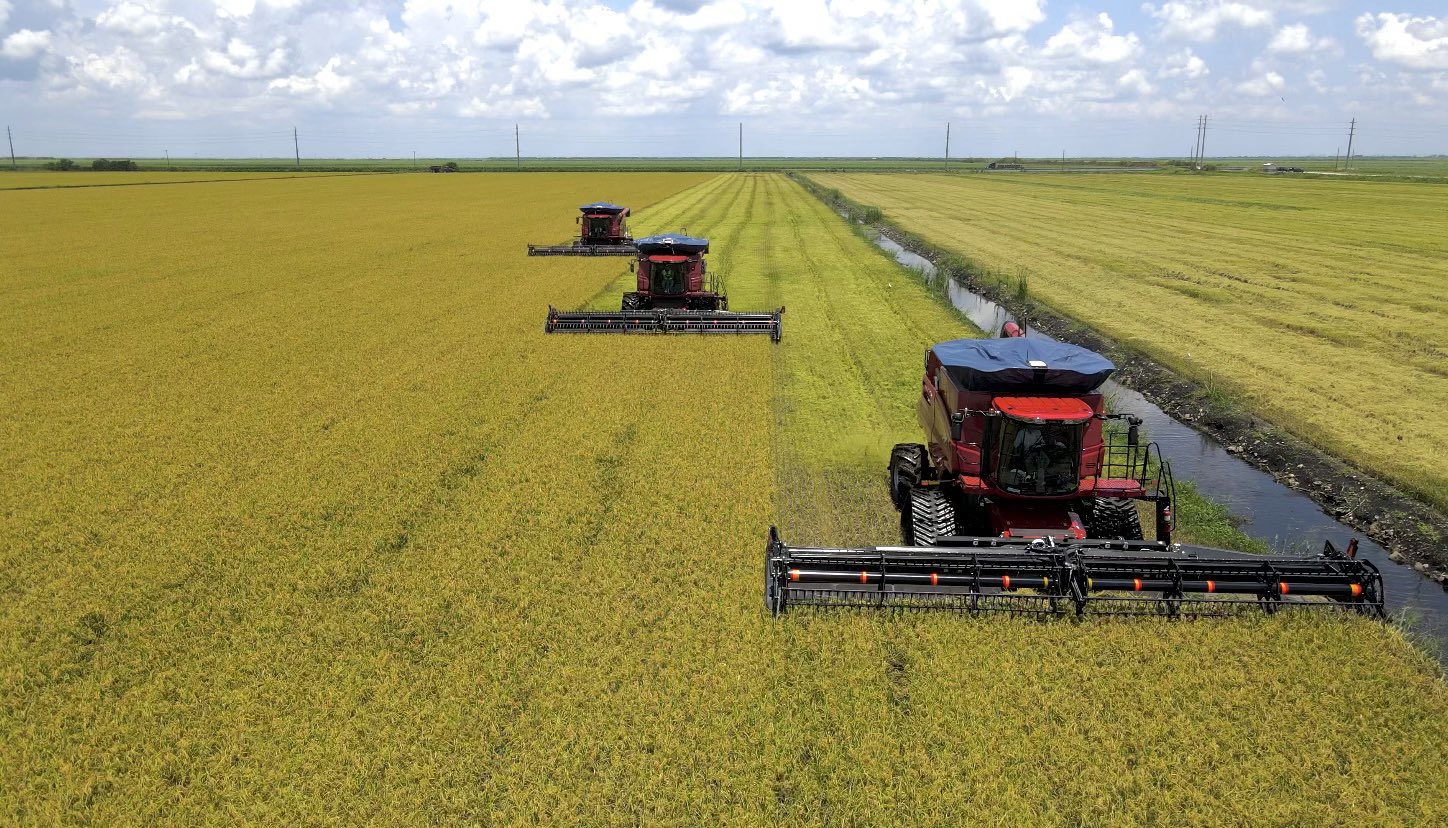
Two to three weeks prior to harvest maturity, farmers drain their fields and then, after fields have dried,
bring in combines to cut the plants and separate the grains from the stalks. The harvested grain is
called rough or paddy rice at this stage because it still has its hard, inedible outer hull.
Before harvested rough rice can be stored and milled, the rice is dried in specialized drying facilities using
warm air to slowly reduce the moisture content.
Beyond the Harvest
When harvest is over, rice fields continue to provide a crucial benefit to the environment: wildlife habitat. 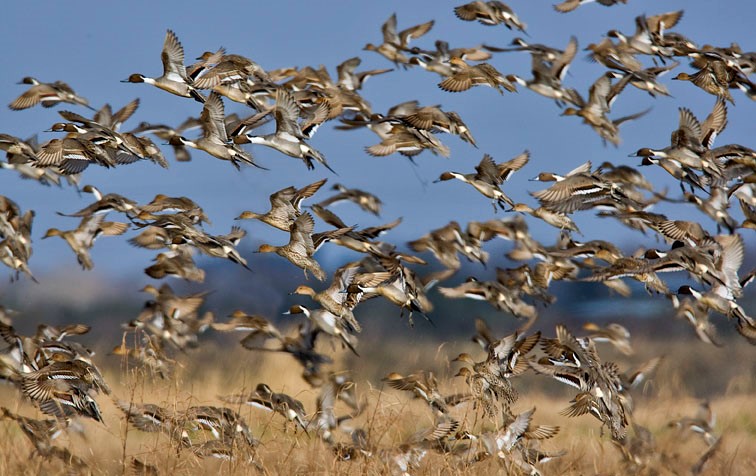 Many rice farmers flood their fields during the winter months, creating valuable wetland habitats
for wildlife and feeding grounds for migratory and wintering waterfowl and other waterbirds, including
half the continent’s migratory birds.
In the rice-growing regions across the United States, rice agriculture provides 35 percent of the food resources available to migrating and wintering waterfowl! Both during the growing season and
after harvest, rice fields also provides excellent habitat for many amphibians, reptiles and water-loving mammals.
Rough Rice to the Mill
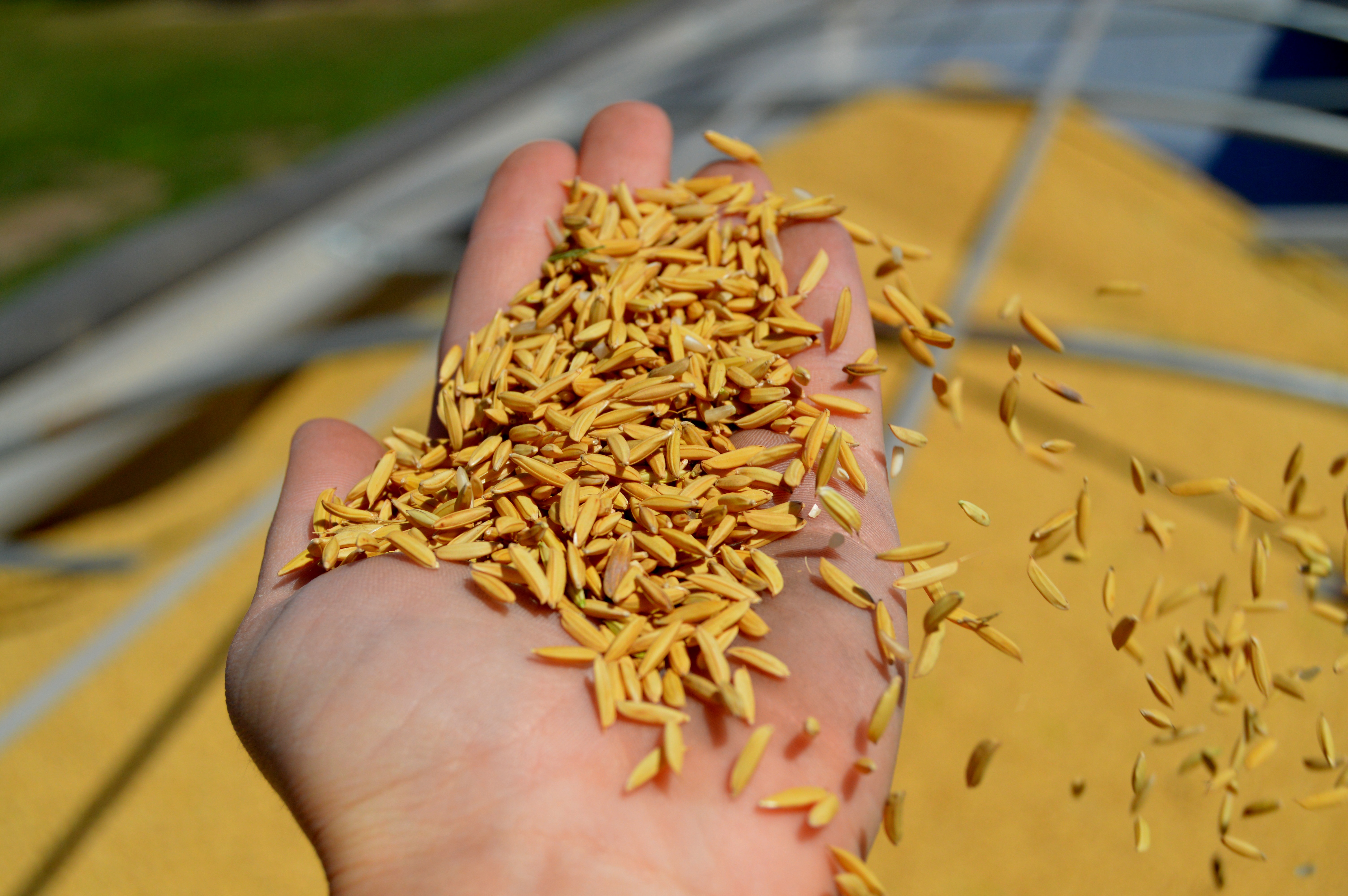
The first step is removing the outer inedible hull, which yields brown rice. This is rice in its whole-grain
stage, meaning the bran and germ layers are intact. Brown rice can be packaged as-is or it can
go through additional milling to remove the bran layers and yield white rice.
U.S. rice mills use sophisticated technology to help maintain quality and consistency, like laser sorting equipment that identifies and removes broken, discolored, or immature kernels.
Finally, the rice is ready to be packaged and make its way to grocery stores, restaurants, and kitchen pantries across the nation.
From Field to Table
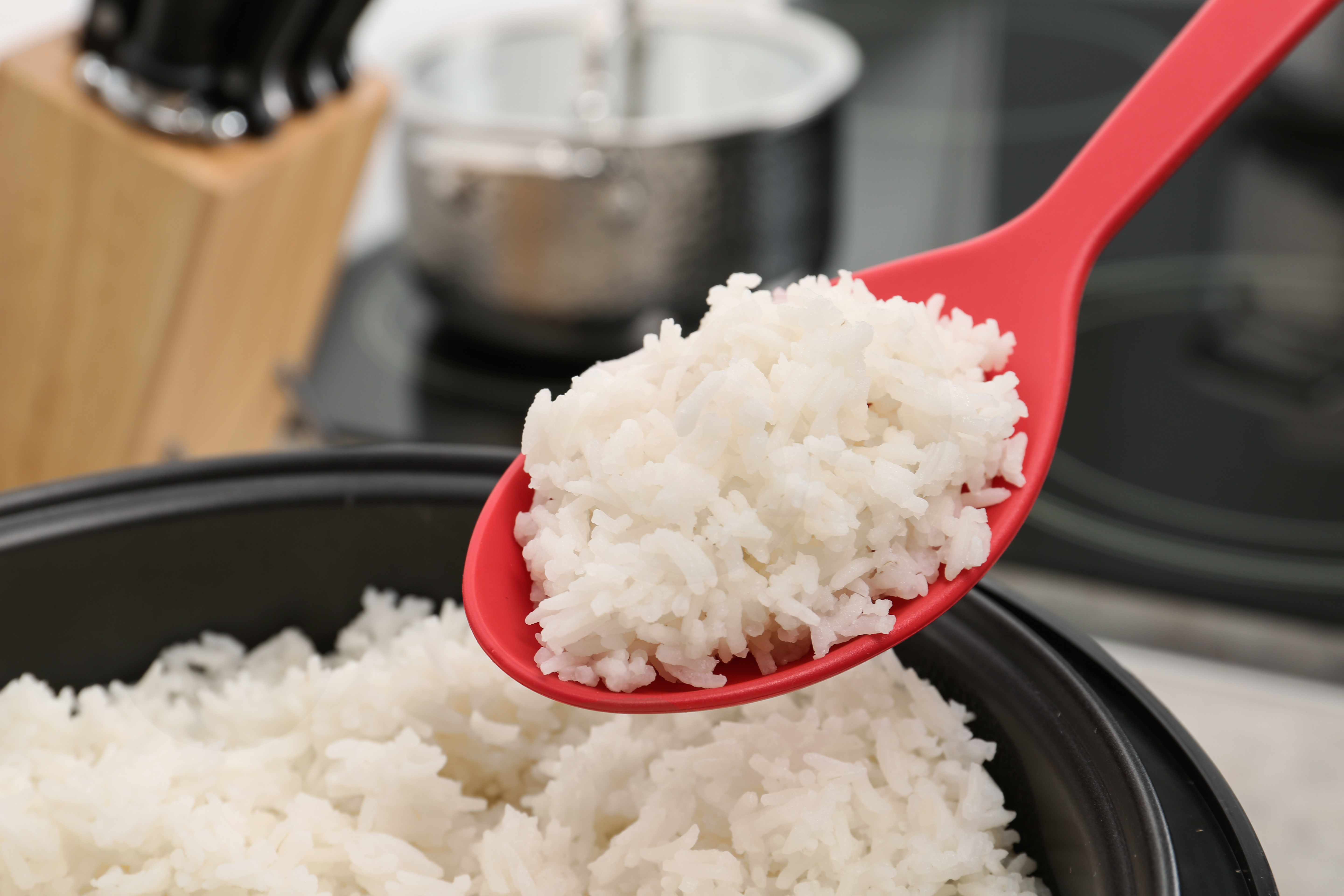 The next time you scoop U.S.-grown rice from your pantry, remember that it started out as a tiny seed planted with care by American rice farmers on family farms across the country.
There are many steps between that first rice seed and the rice on your plate. From planting and growing to harvesting, milling, and packaging, each step helps bring U.S.-grown rice from the field to tables across the country!